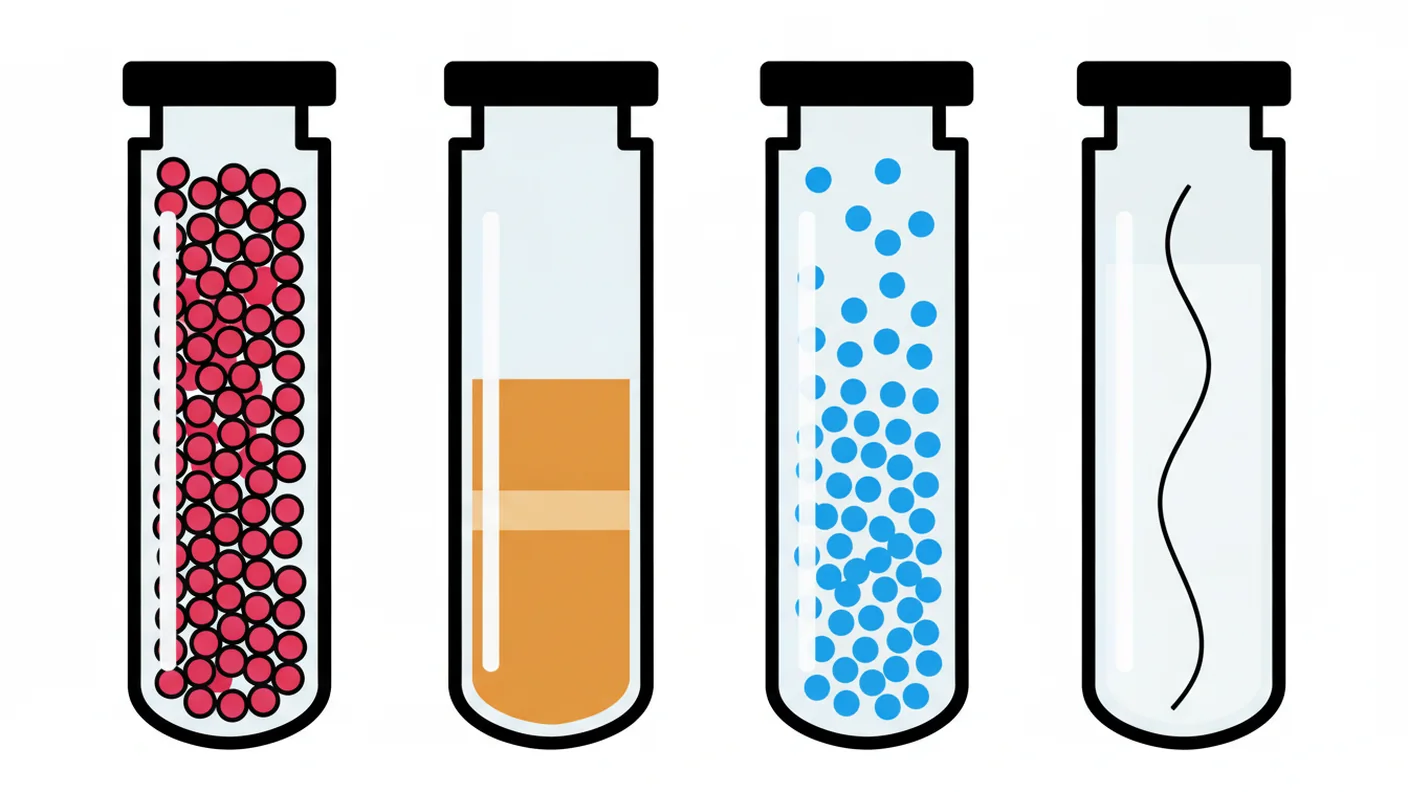
Regenerative medicine in Korea, explained from the evidence
Korea has a large aesthetic-medicine sector and one of the few dedicated statutes in the world for advanced regenerative medicine, routing cell-based interventions through designated institutions and formal committee review. Under one word, “regenerative”, sits a whole spectrum of products: living cells, platelet concentrates, cell-free vesicles, purified DNA fragments, each with its own evidence base. Parts of that spectrum are genuinely well studied: PRP for pattern hair loss has multiple meta-analyses of randomised trials, whose reviewers grade the certainty as low[3], while exosome products, for all their mechanistic promise, hold no United States FDA approval yet for any indication[1].
Questions to ask a clinic in Seoul
If you are considering a regenerative procedure in Seoul, use the eight-question checklist to ask about the product, evidence, risks and follow-up before agreeing. This is a guide to questions, not a clinic ranking or a recommendation to undergo treatment.
The one distinction that organises everything else
Ask what is physically in the syringe. That single question sorts the field better than any brand name, because it predicts both what a regulator will call the product and what kind of study anyone has managed to run on it.
Living nucleated cells
- Autologous MSCs
- Stromal vascular fraction
- Adipose-derived cells
Anucleate fragments in plasma
- Platelet-rich plasma (PRP)
Cell-derived, cell-free
- Conditioned media
- Exosomes and other extracellular vesicles
No cellular material
- PDRN
- Polynucleotides (PN)
At one end sit preparations containing living nucleated cells: autologous mesenchymal stromal cells, stromal vascular fraction, adipose-derived cells. These are the products that the phrase “stem cell treatment” literally describes, and they are the most heavily regulated, because a living cell administered to a person can do things a molecule cannot. At the other end sit polynucleotides and PDRN: purified DNA fragments, in the case of PDRN derived from salmon sperm, containing no cellular material whatsoever[4].
In between are two categories that cause most of the confusion. Platelet-rich plasma is your own blood, spun down so that platelets are concentrated in a small volume of plasma: anucleate cell fragments, not stem cells. And exosomes are small vesicles released by cells, which is to say a cell product without the cell. That last category is the one where the vocabulary has run furthest ahead of the science; the International Society for Extracellular Vesicles has had to publish successive editions of minimum reporting standards partly because laboratories could not agree on what they were even measuring[5]. The difference between stem cells and exosomes is worth understanding before reading any clinic page on either.
Why the evidence question deserves a page of its own
“Studies show” is doing a lot of work in this field. A narrative review, a case series of eleven patients, a randomised controlled trial, and a meta-analysis of such trials are all “studies,” and they support conclusions of wildly different strength. The aesthetic exosome literature is currently dominated by the first two categories: a 2025 comprehensive review found early evidence supporting several indications while noting that the absence of standardisation in how exosomes are produced and applied limits what can be concluded from any of it[2].
The instructive case is PRP, because it is the modality where the research community actually did the work. There are randomised trials, and there are meta-analyses of those trials. And the largest of them, covering 27 controlled trials and 1,117 subjects, concluded that evidence of benefit was limited and mostly of low quality, using formal GRADE assessment rather than an author’s impression[3]. That is what a mature evidence base looks like in this field. Modalities with less research behind them are not better; they are just less examined. How to read evidence levels in regenerative medicine takes this apart in detail.
The regulatory picture, in two jurisdictions
Two regulators matter to most readers of this site, and they answer different questions. The United States FDA has published a standing consumer alert about regenerative medicine products including stem cells and exosomes, which is the document to read before weighing any claim about American approval status. Korea regulates advanced regenerative medicine through its own statute, which routes cell-based interventions through designated institutions and a review committee before they may be conducted.
Neither fact tells you whether a particular clinic is operating properly. That is the part readers most often get wrong: a statute existing is not a clinic being licensed under it, and a paper being published is not a product being approved. Both the Korean framework and the FDA-approval question have pages here that stay inside what the primary documents actually say.
Medical tourism raises the stakes
A reader considering travelling for a regenerative procedure is taking on a risk profile that a local patient does not. A critical review of international stem cell tourism found that clinics offering these therapies are concentrated in jurisdictions with lighter oversight, that reported complications include infection, immune rejection and tumour formation, and that follow-up care after returning home is frequently nobody’s responsibility[6]. If you are reading this from outside Korea, the safety page and the list of questions to ask a clinic are the two most useful pages on this site.
References
- Haykal D, Wyles S, Garibyan L, Cartier H, Gold M. Exosomes in Cosmetic Dermatology: A Review of Benefits and Challenges. J Drugs Dermatol. 2025;24(1):12-18. doi:10.36849/JDD.8872 · PMID:39761139
- Shah M, Dukharan V, Broughton L, et al. Exosomes for Aesthetic Dermatology: A Comprehensive Literature Review and Update. J Cosmet Dermatol. 2025;24(1):e16766. doi:10.1111/jocd.16766 · PMID:39764639
- Cruciani M, Masiello F, Pati I, Marano G, Pupella S, De Angelis V. Platelet-rich plasma for the treatment of alopecia: a systematic review and meta-analysis. Blood Transfus. 2023;21(1):24-36. doi:10.2450/2021.0216-21 · PMID:34967722
- Lampridou S, Bassett S, Cavallini M, Christopoulos G. The Effectiveness of Polynucleotides in Esthetic Medicine: A Systematic Review. J Cosmet Dermatol. 2025;24(2):e16721. doi:10.1111/jocd.16721 · PMID:39645667
- Welsh JA, Goberdhan DCI, O'Driscoll L, et al. Minimal information for studies of extracellular vesicles (MISEV2023): From basic to advanced approaches. J Extracell Vesicles. 2024;13(2):e12404. doi:10.1002/jev2.12404 · PMID:38326288
- Lyons S, Salgaonkar S, Flaherty GT. International stem cell tourism: a critical literature review and evidence-based recommendations. Int Health. 2022;14(2):132-141. doi:10.1093/inthealth/ihab050 · PMID:34415026
Bibliographic records retrieved from PubMed (U.S. National Library of Medicine). Citation here indicates the source of a statement, not endorsement by its authors of any clinic or product.
Written by the Stem Cell Seoul editorial team and medically reviewed by a Korean Board-Certified Dermatologist (AAD International Fellow · ASLMS member). Last reviewed 2026-08-30. Editorially updated 2026-09-29.