Before accepting an exosome product claim: five records to ask for
By the Stem Cell Seoul editorial team · Published
An “exosome” label does not identify the material in a particular container. Start with the exact product and lot, then ask for records that connect the claim to that material. This checklist can make a claim inspectable. It cannot determine whether a product is effective, authorised in a particular jurisdiction or suitable for you.
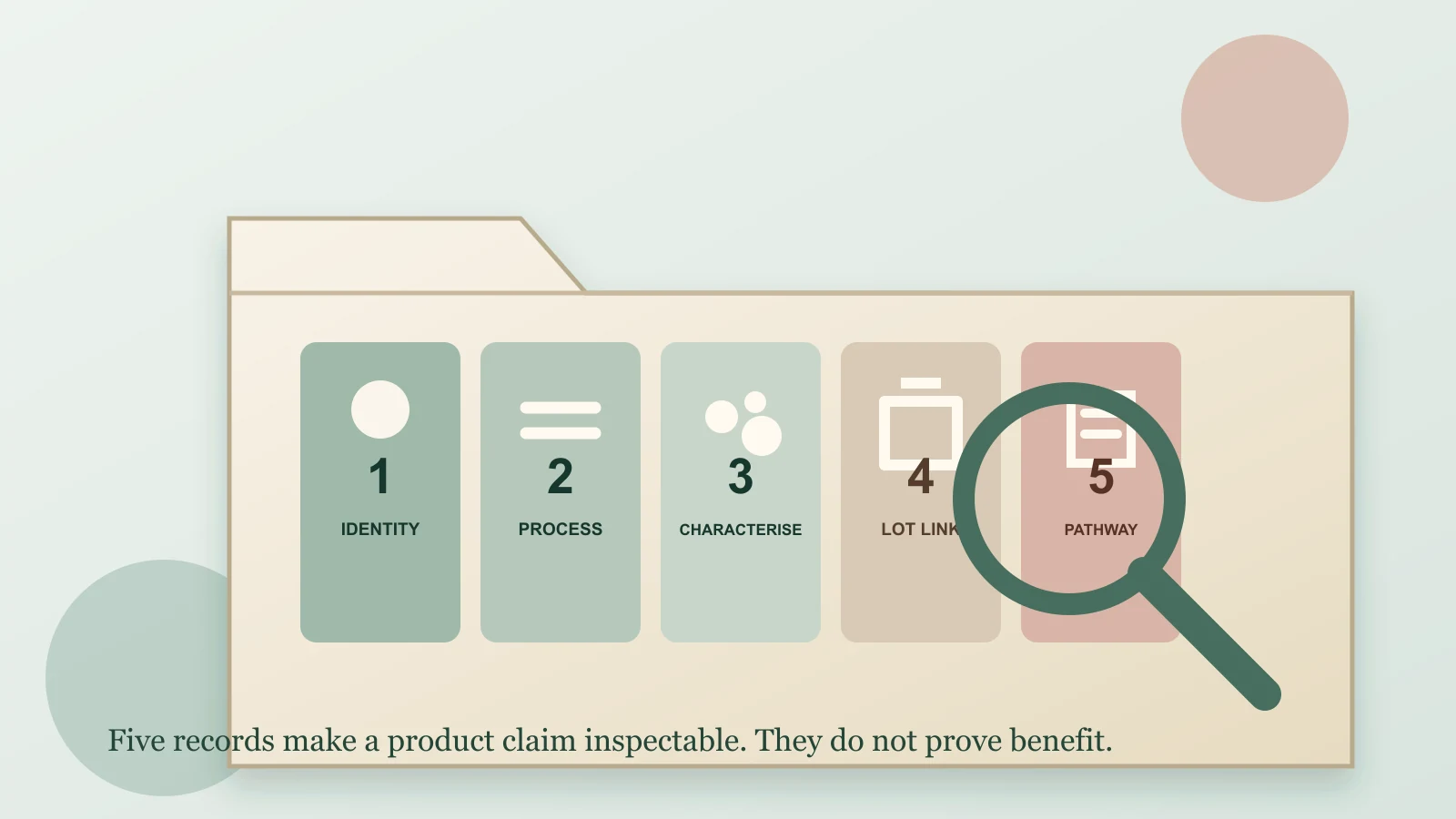
Why one label is not enough
Extracellular vesicles are heterogeneous. The MISEV2023 consensus guidance asks researchers to report source and pre-analytical variables, separation and concentration methods, and complementary characterization. The guidance supports transparent reporting; it does not certify a commercial product or establish a treatment benefit.
That distinction changes the question. Instead of asking whether a brochure “mentions exosomes,” ask whether the documents follow the exact material from source through processing, characterization and the lot being discussed.
Product identity and source
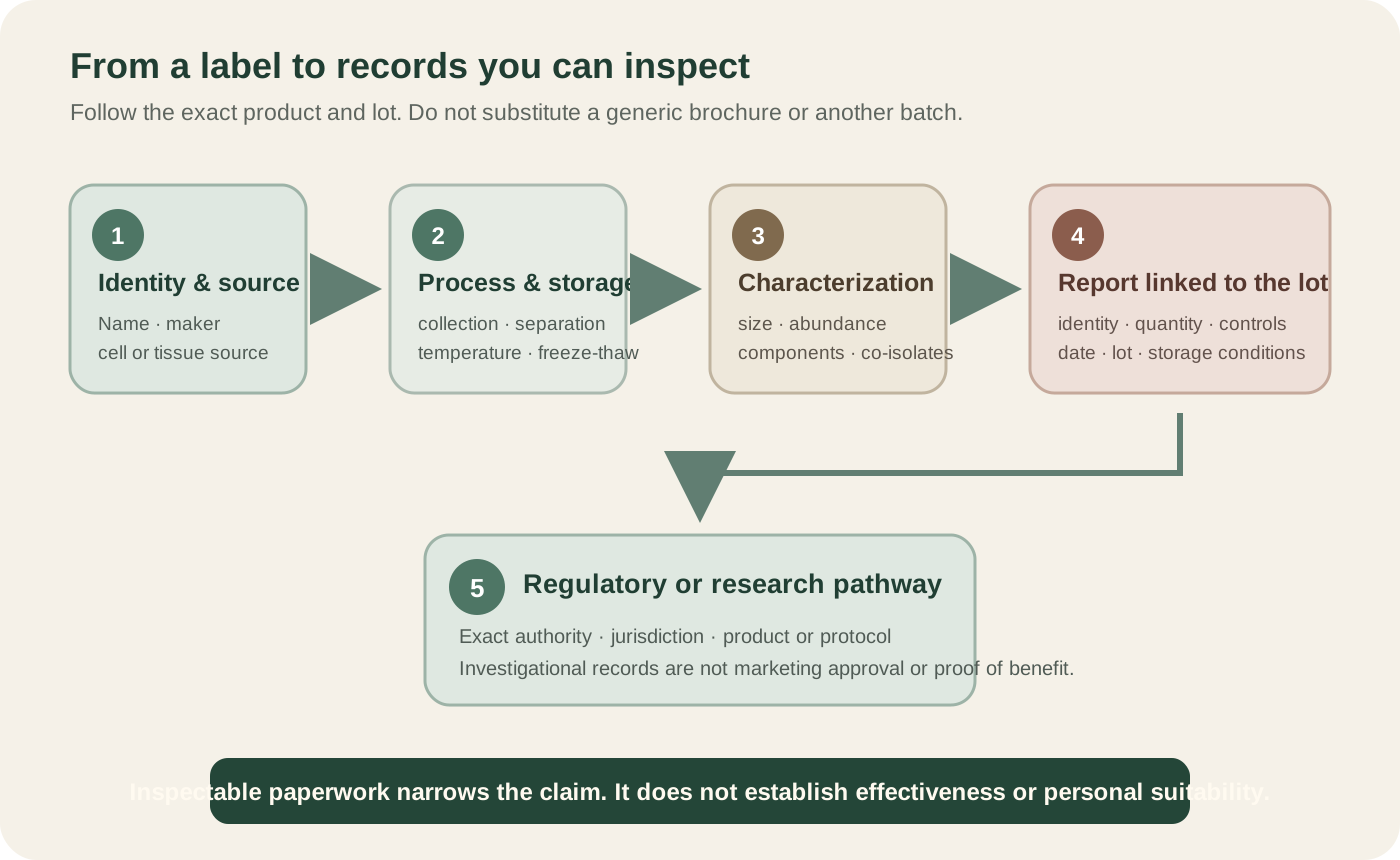
Ask for the product name, manufacturer and the tissue or cell source. For cultured material, ask which cells and culture conditions were used. MISEV2023 explains that source, culture conditions and other pre-analytical variables affect how an extracellular-vesicle preparation can be interpreted.
A generic ingredient name cannot connect a claim to the material you are being shown. Record the exact product and lot before comparing any other document.
Processing and storage
Ask how the material was collected, separated, concentrated and stored, including temperatures and freeze-thaw history. A kit name alone does not describe the whole process. MISEV2023 calls for enough methodological detail to interpret and reproduce a preparation.
Characterization
Look for complementary measurements of the preparation, such as particle size and abundance, vesicle-associated components and co-isolated material. A single marker or a large particle count does not answer all of those questions. MISEV2023 discusses the limits of individual methods and recommends reporting several kinds of evidence together.
A report linked to the lot
Check whether the report identifies the lot being discussed and states what was measured, when, by whom and under which storage conditions. A report for another lot does not establish those results for this one.
The ISEV position paper on clinical translation of extracellular vesicles discusses batch reproducibility and predefined, product-specific release criteria for investigational extracellular-vesicle products. Applying that principle here is a document-review question, not a claim that every consumer is entitled to a particular certificate.
Regulatory or research pathway records
The FDA public safety alert, rechecked on 7 October 2026, states that there are currently no FDA-approved exosome products. FDA’s separate regenerative-medicine consumer information explains that investigational use in the United States follows an IND pathway. A company registration or study listing is not product approval, and a research record does not prove benefit.
Those are United States sources. They do not establish Korean status. For a claim about Korea, ask for the exact Korean document, authority, product or protocol, indication and current status. The MFDS site is a regulator starting point; its general landing page does not verify a particular product or provider.
What the paperwork can and cannot establish
| The records can help you check | The records do not by themselves prove |
|---|---|
| Which product and lot a claim refers to | That the claimed clinical effect occurred |
| Which methods and measurements were reported | That the methods are sufficient for every purpose |
| Which jurisdiction and research pathway a document belongs to | Approval, Korean status or permission for a specific clinic |
Missing paperwork alone does not establish that a product is unlawful. A complete folder also does not establish that a treatment is effective. MISEV2023 is scientific reporting guidance, not a product approval system.
Primary sources
- Welsh et al. Minimal information for studies of extracellular vesicles (MISEV2023). Source, pre-processing, separation and characterization guidance.
- Lener et al. Applying extracellular vesicles based therapeutics in clinical trials. ISEV position paper on manufacturing, reproducibility and release criteria for investigational products.
- US Food and Drug Administration. Public safety alert on unapproved stem-cell and exosome products. United States status statement; rechecked 7 October 2026.
- US Food and Drug Administration. Important patient and consumer information about regenerative medicine therapies. United States investigational-use context; content-current marker 8 April 2024, rechecked 7 October 2026.
- Republic of Korea, Ministry of Food and Drug Safety. MFDS official site. Korean regulator starting point; it does not establish the status of a particular product, provider or protocol.
Related guides: stem cells versus exosomes, FDA approval language and clinical trial registration versus approval.